The Center for Human-AI Innovation in Society

CAHMP Summer Doctoral GRA Research Presentation


Time: 1-3pm, Monday, 9/9

Zoom: https://gmu.zoom.us/j/94054653093

Presentation Details: Each student has up to 8 minutes to present their summer research project. A 2-minute Q&A and feedback session can follow each presentation.

Name Area of Study Presentation Title
1 1:10 1:20 Chahat Raj Computer Science Social Prejudice in Multimodal Generative AI through Visual Question Answering
2 1:20 1:30 Neelam Shukla Public Policy AI and the Future of Taxation
3 1:30 1:40 Liuchuan Yu Computer Science A Collaborative Construction Platform in Virtual Reality
4 1:40 1:50 Minyoung Kim Computer Science A Multimodal Framework for Synthesizing Interactive and Adaptive Narratives in Augmented Reality
5 1:50 2:00 Hao Yan Computer Science Can Code LLMs Be Easily Exploited to Produce Vulnerable Code?
6 2:00 2:10 Irene Feng Human Factors and Applied Cognition Ethical vs. Unethical AI Advisors
7 2:10 2:20 Fairuz Nawer Meem Computer and Information Science Underlying motivations for the adoption of ChatGPT in Software Development tasks
8 2:20 2:30 Gaurab Pokharel Computer Science EvoFair: Navigating the Dynamics of Fairness Evolution
9 2:30 2:40 Md Shafkat R Farabi Computer Science Modelling Fair Assignment of Mediators in Kenya using Multi Armed Bandits
10 2:40 2:50 Vasilii Nosov Public Policy Quality of Regulation and the AI Infrastructure  Depth

.

Upcoming Convening on AI and Data-Driven Decision-Making for Education Policy and Equity

Date and Time: October 8, 2024, Tuesday, 9am – 3:30pm

Location: Merten Hall 1201, George Mason University Fairfax Campus, 4441 George Mason Blvd, Fairfax, VA 22030.

Visitor Parking: Rappahannock Parking Deck, 4395 University Dr, Fairfax, VA 22030 (Hourly rate applies. Parking tickets can be purchased at the pay stations or via the ParkMobile app.)

RSVP is Required. Please register HERE.

The AI and Data-Informed Education Policy Initiative (AIEP) at George Mason University invites you to an exclusive in-person event to learn and exchange information on how recent developments in AI might impact education policy decision-making. 

What to Expect:

  • Expert Presentations: Gain insights from leading experts in education policy, AI, and data analytics, with a focus on how these innovations can be applied in local school settings.
  • Panel Discussions: Join interactive sessions featuring our core team, local school division and education industry leaders, and members of the Mason research community, discussing practical strategies for translating research into actionable policy.
  • Perspectives on Government Policies: Hear from experts of local, state, and federal government education policies. They will share their experiences and perspectives on how AI and data-driven approaches can inform and shape education policy at all levels.
  • Peer Information-Sharing and Networking: Connect with fellow schools and divisions, education policy practitioners, researchers, and policymakers who are equally dedicated to transforming education through evidence-based policy and practice.

Featured Speakers:

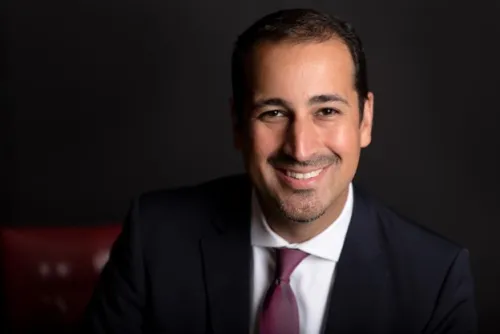
Roberto-J-RodriguezRoberto Rodriguez
Assistant Secretary for the Office of Policy Planning and Development,
U.S. Department of Education
David MyersDavid Myers
Deputy Superintendent and Chief Information Officer,
VA Department of Education
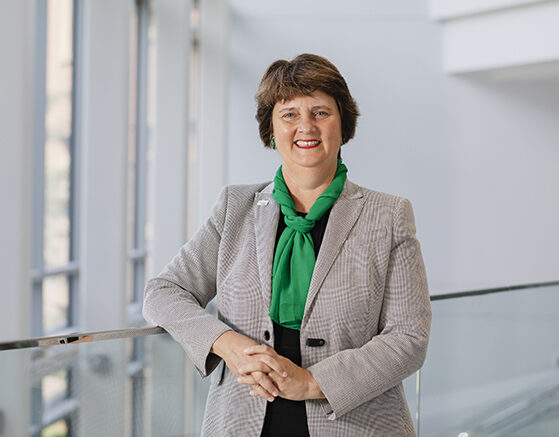
Amarda Shehu
Inaugural Chief AI Officer, GMU
Ingrid Guerra-LópezIngrid Guerra-López
Dean, College of Education and Human Development, GMU
Anne HoltonAnne Holton
Professor, Education Policy, GMU
Thema Monroe-White
Associate Professor of Artificial Intelligence and Innovation Policy, GMU
Jacob BoulaJacob Boula
Executive Director of PK-12 Curriculum & Instruction,
Winchester Public Schools
Jim SieglJim Siegl
Senior Technologist for Youth & Education Privacy,
Future of Privacy Forum

Event Agenda

Time Event Speakers
9:00am Check-in
9:10am – 9:30am Opening Remarks Anne Holton – Professor, Education Policy, GMU
Ingrid Guerra-Lopez – Dean, College of Education and Human Development, GMU
Amarda Shehu – Inaugural Chief AI Officer, GMU
9:30am – 10:15am Panel: Policies for AI Use in Education: Federal, State, and Local Moderator: Anne Holton
Roberto Rodriguez – Assistant Secretary, Office of Policy, Planning and Development
Dr. David Myers – Deputy Superintendent and CIO, Virginia Department of Education
Dr. Jacob Boula – Executive Director of PK-12 Curriculum & Instruction, Winchester Public Schools
Jim Siegl – Senior Technologist for Youth & Education Privacy, Future of Privacy Forum
10:15am Coffee Break
10:25am – 11:10am Panel: AI for Education Use Cases: Bridging research to practice Moderator: Peng Warweg
Sanmay Das – Professor, Computer Science, GMU
Antonis Anastasopoulos – Assistant Professor, Computer Science, GMU
Anya Evmenova – Professor, Education, GMU
Craig Yu – Associate Professor, Computer Science, GMU
Ziyu Yao – Assistant Professor, Computer Science, GMU
Jennifer Suh – Professor, Education, GMU
11:10am – 12:00pm AI-Enabled Tools for Practice & Research in Education Seth Hunter – Associate Professor, Education Leadership, GMU
Beth Davis – Postdoctoral Fellow, EdPolicyForward, GMU
Nabit Bakr Bajwa – Graduate Research Assistant, Computer Science, GMU
12:00pm Lunch
12:30pm – 1:00pm Panel: Responsible AI for Education Moderator: Sanmay Das
Thema Monroe-White – Associate Professor, AI and Innovation Policy, GMU
Jered Borup – Associate Professor, Learning Tech, GMU
Ziwei Zhu – Assistant Professor, Computer Science, GMU
1:00pm – 1:45pm Division Information Sharing: Artificial Intelligence for Responsive, Inclusive School Enhancement (ARISE) Moderator: Seth Hunter
1:45pm – 2:30pm Division Information Sharing: Strategies for AI Implementation Moderator: Beth Davis
Gautam Sethi – Chief Information Technology Officer, Fairfax County Public Schools
Aaron Smith – Chief Technology Officer, Loudoun County Public Schools
Matt Caratachea – Director of Instructional Innovation, Goochland County Public Schools
Ed Stephenson – Director of Instruction, Manassas City Public Schools
2:30pm – 3:30pm Network and additional Q&A


Click here to access the event presentation slide deck.

Suggested learning resources for this event.

Join the ARISE (AI for Responsive, Inclusive School Enhancement) Community or Practice to engage with and learn from each other. Our next event is in December. Please stay tuned for more information on that.


This conference is made possible by a grant from the Hewlett Foundation. 

About AIEP: AIEP is a collaboration between EdPolicyForward in the College of Education and Human Development and the Center for Advancing Human-Machine Partnership (CAHMP) at George Mason University. At AIEP, we are committed to partnering with local schools and divisions while leveraging the power of artificial intelligence (AI), advanced data analytics, and transdisciplinary research to address the most pressing challenges in education policy and equity.  

AIEP Team:

Sanmay Das
Professor, Computer Science, GMU
Anne HoltonAnne Holton
Professor, Education Policy, GMU
Seth Hunter
Associate Professor, Education Leadership, GMU
David Houston
Assistant Professor, Education Policy, GMU
Peng Warweg
Assistant Director, CAHMP, GMU
Beth Davis
Postdoctoral Fellow, Education Policy, GMU
Nabit Bakr Bajwa
Doctoral Research Assistant,Computer Science, GMU

New Pilot Study on Specialized AI Assistant Tools to Enhance Research-Based School Improvements


K-12 education has entered a new frontier where educators are exploring the power of artificial intelligence (AI) in innovative ways to enhance student outcomes. While many human-AI collaborations focus on efficiency, some venture into uncharted territory, exploring qualitatively new and improved decision-making. Dr. Seth B. Hunter, Assistant Professor of Education Leadership and Senior Fellow of EdPolicyForward, the Center for Education Policy at George Mason, has embarked on one such venture by exploring how AI can assist aspiring and current educational leaders in making better school improvement decisions based on current, rigorous, and technical education research.

School leaders nationwide regularly engage in school improvement planning, setting performance goals and designing action plans to achieve them. While the degree to which school leaders explicitly base their plans on rigorous research may vary, it is crucial for all school leaders to consult relevant research to design the most effective plans. K12 educators do use research for decision-making and practice; however, they often overlook rigorous, technical research written for academic audiences, which could provide the best recommendations for school improvement.

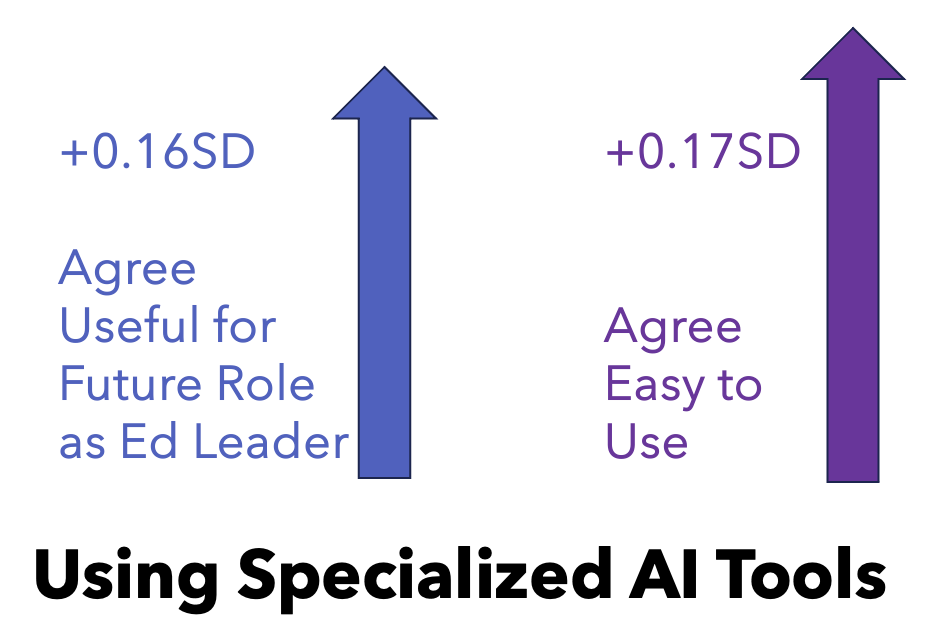
Dr. Hunter is exploring novel ways to bridge the gap between technical academic research and its use for school improvement via AI-enabled tools. These tools focus on finding the most rigorous academic research and translating it for lay audiences. In a recent pilot study, Dr. Hunter randomly assigned these tools to a Northern Virginia cohort of aspiring principals enrolled in Mason’s Education Leadership MEd program; the control group was in the same program, but it found and made sense of research using traditional means. The MEd students reported that using the specialized AI tools was significantly easier than using conventional means; those using AI-enabled tools were also much more likely to reportthat finding and making sense of research would be helpful in their jobs as future leaders. These pilot study results suggest that AI-enabled tools can shrink the gap between rigorous and technical academic research and K12 research use.

In future work, Dr. Hunter will scale up this intervention with current principals and central office administrators, explore how AI tools use changes to school and district improvement plans, and see if those changes affect student outcomes.

2024 Transdisciplinary Center Summer GRA Fellowship now Open for Application

Call for Applications: CAHMP Summer 2024 GRA Fellowship   

We are inviting applications for summer research assistance funding from Mason Master’s and doctoral students who do not already have Mason summer funding. If accepted, each awardee will receive a stipend of $6,500 (Master’s) or $8,500 (Doctor’s). Applying students should provide a short summary of what project they will be working on over the summer. While we will consider all projects concerning human-machine partnerships, special consideration will be given to transdisciplinary projects centering around CAHMP thematic thrusts: 

  • Fairness, Accountability, Transparency, Inclusion, and Equity in AI 
  • AI Policy and Governance  
  • Human-Computer Interaction (human-machine teaming) 
  • Assistive Technology  
  • Learning Technology 
  • Community Informatics  
  • Generative AI and applications 

 (including AR/VR, computer vision, wearable tech, robotics, cyber, data science, digital humanities, etc.) 

Recipients of this summer funding may be invited to present their projects at a CAHMP social event during the next academic year. 

Application Instructions 

Applicants, please submit the following here – https://forms.office.com/r/QQKJVUR4hx by April 14th, 2024:

  1. A project title and a 250-word proposal that describes your project; 
  2. The student’s level of study (Masters of doctoral), home department, and faculty mentor(s), one of whom must be a CAHMP core or affiliate faculty member; 
  3. A CV. 

Mentors, please provide your quick endorsement here – https://forms.office.com/r/RTiRimH1k3 by April 14th, 2024. The endorsers must confirm that there are no alternative means of supporting the applicant over the summer.  

Eligibility requirements 

–Applicants must be Mason students listed in university records as full-time during Spring 2024 and must plan to return as a graduate student in Fall 2024.  

–GPA 3.0 and good standing  

–Receive no other funding from Mason over the summer  

–We will give preference to new applicants who have not received previous CAHMP GRA support.  


Expert Panel Addresses Chronic Absenteeism in Local Schools: A Collaborative Approach to Tackling Attendance Challenges


On January 24th, a dynamic researcher-practitioner panel convened with local school leaders to delve into the pressing issue of chronic absenteeism. The panel provided a unique platform for collective knowledge sharing and learning, fostering collaboration among education stakeholders in the ongoing battle against absenteeism.

Moderated by Mason’s professor of education, Anne Holton, the panel witnessed insightful discussions and presentations aimed at understanding the root causes of absenteeism and exploring effective solutions.

Dr. Seth Hunter and doctoral student, Alyssa Barone, presented the latest research findings on attendance causes and solutions. The presentation, characterized by its rigor and up-to-date insights, shed light on the multifaceted nature of absenteeism and highlighted evidence-based strategies for improvement. In the aftermath of the enlightening session, two local school divisions reached out to Dr. Hunter expressing interest in collaborating on student attendance research tailored to their unique contexts. These collaborations are poised to delve deeper into the specific challenges faced by each division and identify context-specific solutions to enhance student attendance rates.

The event underscored the importance of collaborative efforts in addressing chronic absenteeism and showcased the power of research-practice partnerships in driving meaningful change in education.

CAHMP Receives Funds for Collaborative Research in Ed Policy and Artificial Intelligence

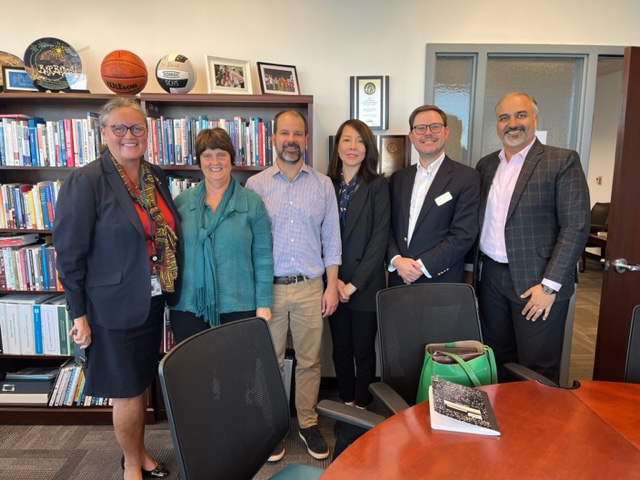
Pictured above are the research team with FCPS Superintendent, Michelle Reid and FCPS CIO, Gautam Sethi. (From left to right, Michelle Reid, Anne Holton, Sanmay Das, Peng Warweg, Seth Hunter, and Gautam Sethi)


Two centers at George Mason University—EdPolicyForward in the College of Education and Human Development and the Center for Advancing Human Machine Partnership (CAHMP), a transdisciplinary research center—will collaborate on a project that aims to better connect research to practice in education policymaking, and support school divisions in improving student and teacher performance and enhancing the effectiveness and fairness of resource allocation through data-driven decision making.

The collaboration is supported by a generous gift from the William and Flora Hewlett Foundation is a nonpartisan, private charitable foundation that advances ideas and supports institutions to promote a better world. The collaboration between EdPolicyForward and CAHMP manifests the power and opportunities that transdisciplinary research can bring to Mason’s research and practice community.

The Education Program at Hewlett Foundation makes grants to help educators, schools and communities turn schools into places that empower and equip students for a lifetime of learning and to reach their full potential.

The core Mason project team includes Sanmay Das, professor of computer science and co-director of CAHMP; Anne Holton, professor of public policy and education; Seth B. Hunter, assistant professor of education leadership; David Houston, director of EdPolicyForward and assistant professor of education; and Peng Warweg, assistant director of CAHMP.

The project will leverage the core team’s expertise in education policy research, artificial intelligence, and advanced data analytics, as well as partnerships with local school divisions, to better connect research to practice, with the goal of helping all students succeed through efficient, effective, and equitable use and distribution of school resources.

Over the next 16 months, the team will deliver a series of policy briefs to communicate relevant research findings to state and local leaders on matters of importance to their decision-making, creating a two-way dialogue between researchers and policymakers, and a dissemination strategy to inform the policymaking decisions of local, state, and national audiences.

The project is also expected to enhance the capacity for data-driven decision-making in school divisions, especially in the use of methods from artificial intelligence (AI) and advanced data analytics to support and enhance equity in access to programs that benefit student outcomes and improve student and teacher performance.

EdPolicyForward, the Center for Education Policy, promotes equity and improved educational outcomes for all students, from preschool through college and beyond. The center connects research to policy and practice, develops and advances effective and pragmatic solutions, and drives meaningful public discourse addressing persistent inequalities in U.S. public education.

Founded in 2019, the transdisciplinary CAHMP facilitates research, teaching, and innovation in understanding and leveraging human-machine partnership to solve current and emerging societal problems. CAHMP’s network of researchers work on cross-disciplinary topics, such as responsible AI, learning technology, education policy and analytics, and generative AI for education.

2023 AI and Tech Policy Summer Institute Opening Reception

2023 CAHMP Mini Seed Funding

Overview and Purpose

The purpose of this mini seed funding is to enable pilot research that will lead to submissions to externally funded research programs in the broad area of “human machine partnership.” We seek to identify and support interdisciplinary teams planning to pursue novel convergent research. The seed grant can support new or existing teams to perform activities, such as faculty effort, preliminary research, team building, and project scoping, that are necessary to enable the submission of a competitive larger proposal in the future. Funded projects should lead directly to an external proposal submission as a next step.

Investigator Specification

Proposals should come from teams of at least two investigators from at least two different departments or disciplines. CAHMP Affiliate members must collaborate with a Core member to submit an application. In addition to listing the investigators, proposals should identify additional faculty members, disciplines, or external partners, if applicable, that the team will engage during the seed grant period.

Activities Eligible for Support

The mini seed grants aim to support a range of planning activities intended to foster a convergent research team that can effectively integrate multiple disciplinary perspectives, explore the research theme in depth, build collaborations with relevant stakeholders, and hone specification of research gaps, questions, and hypotheses. Activities within scope include, but are not limited to, workshops, stakeholder meetings, literature reviews, data collection, preliminary experiments, prototypes, and pilots. In all cases, the proposed activities should be designed as a step along the path to a future external grant.

Budget Guidelines

Teams should propose a budget commensurate with the scope of their proposed activities and their intended next steps. The maximum allowable budget for a proposal is $20,000. The total requested amount, as well as the individual line items, should be clearly justified in the budget section of the proposal.

Eligible budget categories include faculty time (summer salary and/or AY course buyout), student assistantships and/or wages, travel (for team building), equipment, materials & supplies, and participant support costs. There is no need to budget indirect costs.

Funds will be transferred to the PI’s home department. Unspent funds must be transferred back to CAHMP within 45 days of the project’s end date. Project periods should end before June 30, 2024.

Proposal Content

Proposals should be no more than three (3) single-spaced pages (please use the template provided attached), using Times New Roman 12-point font. Proposals should address the following topics:

  • Definition of the research theme/area and motivation for its importance
  • History and current status of the research theme (literature/conceptual review)
  • Vision for development of the research theme
  • Qualifications of the interdisciplinary team
  • Specific external grant objective and target source
  • Timeline (projects should not extend past June 30, 2024.)
  • Budget and budget justification

Review Criteria

  • Strength and potential of the interdisciplinary team
  • Importance and potential of the research theme
  • Opportunity for the team to create a distinct and compelling research niche
  • Clarity and feasibility of the plan to achieve external funding
  • Overall potential return on investment
  • Relevance of the theme to the vision and interests of CAHMP and Mason

Submission Process

Email a PDF copy of your submission to Peng Warweg at [email protected] by 5:00 p.m. EDT on Wednesday, May 31, 2023.

Proposals will be reviewed, and funding decisions will be made by the CAHMP leadership team and external advisors by no later than June 30, 2023 (earlier if possible).

2023 CAHMP Spring Mini-symposium


Please mark your calendar and come to join our 2023 spring mini-symposium next Wednesday (4/19) at 1-3pm. We have lined up four exciting talks by three new CAHMP members, Jonathan Auerbach, Erion Plaku, and Xiaokuan Zhang, as well as Matthew Steinberg, Director of EdPolicyForward here at Mason. Please check out their abstracts below. The symposium will end with a panel joined by all four speakers and moderated by CAHMP co-director, Sanmay Das.

Time: 4/19/23 Wednesday, 1-3pm

In-person Location: Research Hall 440A. Light refreshments will be served.

For online participants – Please contact Peng Warweg for joining information.


Speaker: Jonathan Auerbach, Assistant Professor, Department of Statistics, George Mason University 

Topic: Computer-Assisted Selection of Board Members to Improve Equity and Inclusion 

Abstract: From local governments to international corporations, there has been increased demand for diverse governing boards. In many cases, the number of members who identify as women and people of color have increased substantially. But diverse membership does not automatically mean inclusive or equitable participation. Members can be excluded from the conversation by procedures that favor the majority group or behaviors such as interruptions, bullying, and discriminatory harassment. 

In this presentation, we propose a methodology that models the interactions among board members. The model can be used to assess barriers to participation among current members and select new members to promote inclusion and equity. We demonstrate the proposed approach using more than twenty-four hours of video footage from meetings of Manhattan’s Community Boards in addition to an extensive follow-up survey. We find a large gap between nominal representation on boards and actual representation in terms of participation in activities (e.g., speaking time at meetings). We then show how a more thoughtful selection of board members can greatly reduce this gap. 

This is joint work with Catherine DeLazzero and Ashley Maria Garcia-Parra (Columbia University) and Eric Auerbach and Sidonia McKenzie (Northwestern University). 


Speaker: Erion Plaku, Associate Professor, Department of Computer Science, George Mason University 

Topic: Toward Supervised Autonomy: Enhancing Automation and Human-Robot Collaboration 

Abstract: Advances in AI and robotics are giving rise to systems that can see, hear, communicate, act, and learn, seeking to extend and enhance every aspect of human life.  This progress has been driven by the pursuit of fundamental questions that continue to drive much of our research: how do you enhance the autonomy and capability of robots to work alongside and collaborate with humans? Toward this goal, my group’s research brings together concepts from AI, robot motion planning, and logic, to develop planning frameworks that enable human supervisors to describe tasks in high-level structured languages and have the framework automatically plan actions and motions for robots to safely and effectively complete assigned tasks.  This line of research has the potential to establish a novel paradigm for supervised autonomy that increases productivity and capabilities. Applications in marine robotics will be highlighted. Finally, I will discuss emerging challenges and opportunities, as well as share my vision of the way forward. 


Speaker: Xiaokuan Zhang, Assistant Professor, Department of Computer Science, George Mason University 

Topic: Security and Privacy Concerns in Computer Systems: Exploring the Human Connection 

Abstract: Computer systems have been rapidly evolving over the past several decades, with the emergence of new technologies such as smartphones and blockchains transforming the way humans interact with these systems. Since computer systems often need to process, transmit and store sensitive user data, it is crucial to ensure the security and privacy of such systems. However, these challenges are not solely technical, but are also impacted by human factors. This talk will delve into the security and privacy concerns in computer systems, and how human behavior and decision-making can affect these issues. The presentation will begin with an exploration of side-channel attacks, which can reveal otherwise protected information from computer systems by observing traces (e.g., timing, power, or resource usage). It will then move on to examine security issues in two emerging platforms, blockchain Decentralized Finance (DeFi) and virtual reality systems, while considering the impact of human factors on their security. The talk aims to highlight the importance of considering human behavior and decision-making in the development of secure computer systems. 


Speaker: Matthew Steinberg, Associate Professor of Education and Public Policy, George Mason University 

Topic: Ed Policy at Mason 

Abstract: Dr. Steinberg, Director of EdPolicyForward: The Center for Education Policy at George Mason University, will provide a high-level discussion of the Education Policy program at George Mason University and an overview of his education policy research projects. A few recent research projects will be highlighted, including: (a) What explains the race gap in teacher performance ratings? Evidence from Chicago Public Schools; (b) The effects of closing urban schools on students’ academic and behavioral outcomes: Evidence from Philadelphia; (c) Fiscal federalism and K–12 education funding: Policy lessons from two educational crises; and (d) Do suspensions affect student outcomes? 

Minerva AI Strategies


CAHMP faculty and Schar School of Policy and Government professor, J.P. Singh leads a team of researchers from across George Mason University campuses that has been awarded a three-year, $1.39 million grant to study the economic and cultural determinants for global artificial intelligence (AI) infrastructures—and describe their implications for national and international security. The grant was awarded by the Department of Defense’s esteemed Minerva Research Initiative, a joint program of the Office of Basic Research and the Office of Policy that supports social science research focused on expanding basic understanding of security. This project teams consists of a multidisciplinary team of five faculty and four doctoral students. The team’s project, now called “AI Strategies”, kicked off in April 2022. Please find out more information from their project website –AI Strategies.